Pets with obesity are at increased risk for developing serious weight-related disorders such as diabetes, arthritis, high blood pressure, kidney disease, cancer, to name a few.
How can I tell if my dog or cat is overweight or obese?
-
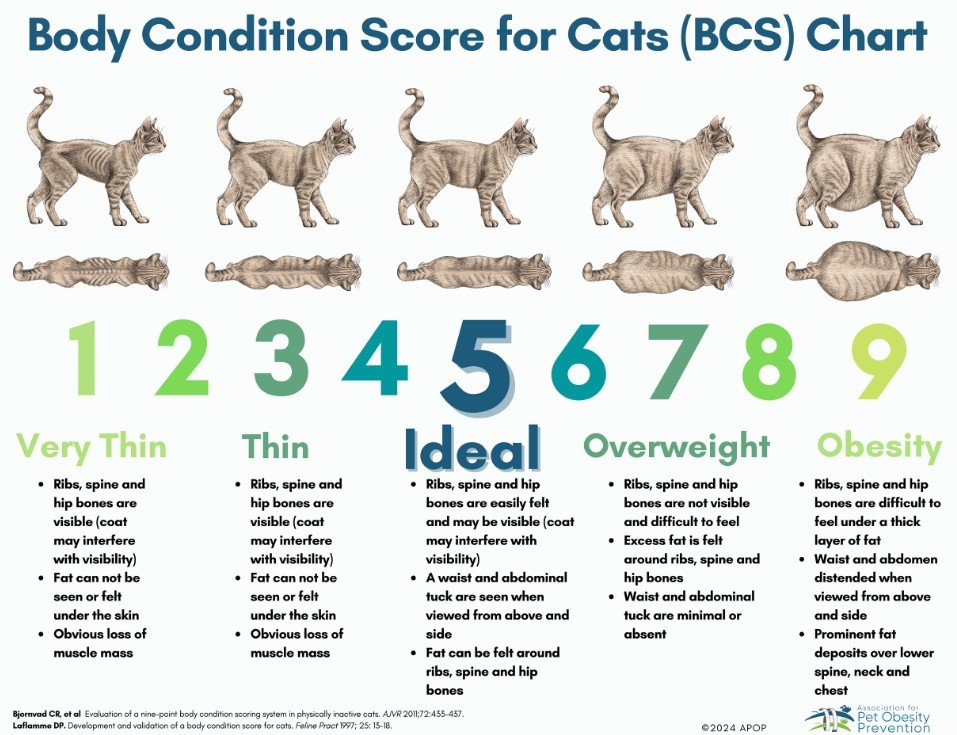
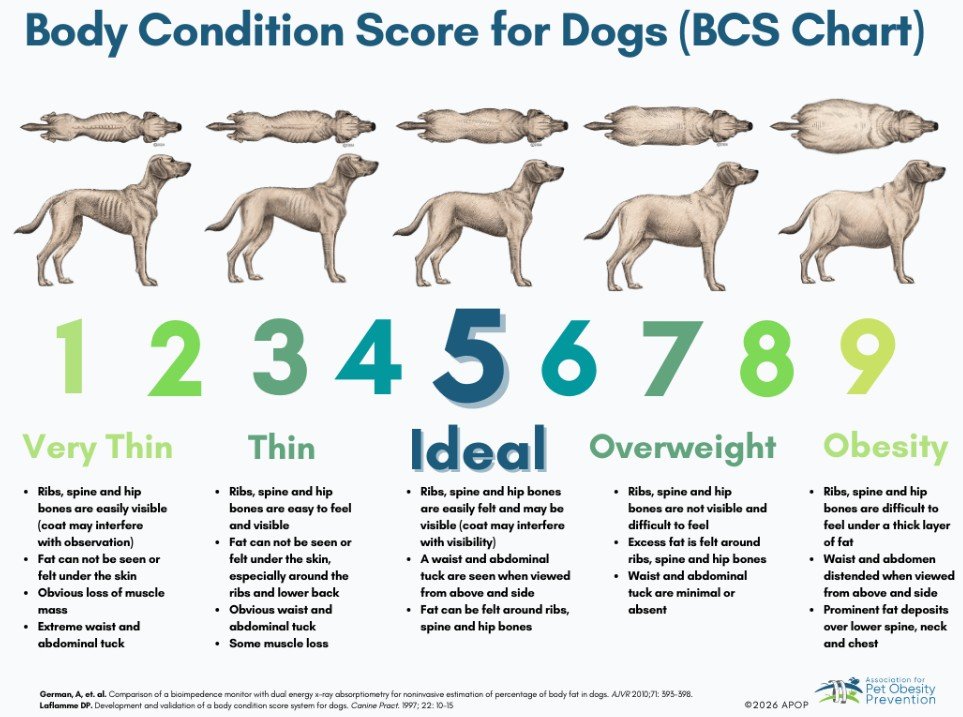
Feel your pet’s body. You should easily feel and count your pet’s ribs when you gently run your fingers along their side. A healthy-weight pet will have a thin layer of fat over the ribs and spine that you can feel but not see. If you feel a thick layer of fat, your pet may be overweight.
-
Look at your pet from above. Stand over your pet and observe its body. Your pet should have a visible waist behind the ribs that tapers slightly towards the hips. If your pet does not have a visible waist or has a bulging waist, it may be overweight.
-
Schedule routine check-ups with your veterinarian. If you suspect your pet is overweight, consult your veterinary healthcare team for guidance and assessments during check-ups. Your veterinarian will likely conduct a couple of measurements, determine a Body Condition Score (BCS – see below charts), and measure your pet’s current weight. .
How do I know how much to feed my pet?
Once again talk to your vet healthcare team . How much you should feed your pet will be based on several factors such as species, age, breed, energy level and current, if any, health care issues. While there are different pet foods that offer low calorie or fat, you can use the regular pet foods at reduced amounts. You can also supplement foods such as green beans or pureed pumpkin that will also help your pet feel full. Treats are always ok but don’t forget to count them as part of your pet’s diet
How much exercise does my pet need?
Just like the food you feed your pet, the types of activities should be based on your pet’s species, breed, age, gender, and current physical abilities and level of obesity. The opportunities for physical activity with your pet include walking, swimming, agility, chasing and retrieving, balls/ lights. The most important factor, though, is being consistent.
How you spend those exercise minutes will determine if you do it or not and if you stick to those activities. Make your interactions enjoyable, entertaining, and interactive to keep your dog and cat engaged and enjoying these physical activities. Cat owners, don’t ignore the essential role of physical activity for your cat’s physical and mental health and well-being. Whether you play with a feather duster or favorite toy, move the food bowl each feeding, or use a hip, high-tech toy, engage your cat’s inner predator and encourage it to pounce, leap, and prowl for several minutes at least three times per day. The general recommendation is that dogs need at least thirty (30) minutes of physical activity a day, and cats should strive for three five-minute structured play periods.
Is my pet at risk for a medical problem due to excess weight?
Not unlike humans, the fewer minutes you spend on diet, physical activity and weight management could be the difference between additional years of high-quality life or a shortened, suffering, final stage of life. Together, you, your pet, and your veterinary healthcare team can chart a course for a better, longer, and happier life for your pet worth it.